Friday, January 19, 2007

A list of my favorite politically oriented musicians


Here is a list of my favorite left leaning bands and individual musicians, from a variety of different musical genres.

I'm in my forties and having grown up on pop and rock and loved such musics from an early age, inevitably, my interests in music and politics (as well as sociology, which I study/teach) became somewhat intertwined. When I was a kid growing up in a lower middle class Democratic household in NJ, with aunts and uncles who were nostalgiac for the big bands of the 1940s, parents who liked pre-rock music (lots of Frank Sinatra, Ella Fitzgerald and Tony Bennett) and older siblings who listened to everything from the Beatles to Donovan to Iron Butterfly, I was exposed to a wide range of music (including late 1960s "folk masses" at church, showtunes, commercial jingles from the 60s/70s, and much else in between). Then, starting late in high school and continuing in college and grad school, my taste in music began to expand, and incorporated such genres as punk/new wave, funk, hip-hop, jazz, folk, blues, bluegrass, and even a bit of classical and modern music. I now listen to lots of different music, some of which, such as the Beatles and various Motown groups, I have liked since childhood, and much else I have discovered in later years.

One of my proudest achievements, in fact, was organizing an academic conference on hip-hop last year at Lehman College

Anyway, as far as politics and music, here is a list of some of my favorite performers whom I associate with the left end of the political spectrum. I like what these musicians stand for. But I also like and deeply appreciate them as musical artists.

The Clash - These guys knew how to rock, and knew how to make their audience think. Offered such insightful lyrics, about such topics as working class oppression as

"So get back to work an' sweat some more The sun will sink an' we'll get out the door It's no good for man to work in cages Hits the town, he drinks his wages You're frettin', you're sweatin' But did you notice you ain't gettin'?"

and militarism

"All the young people down the ages They gladly marched... off to die Proud city fathers used to watch them Tears in their eyes"

And how can you not love a band that could come up with lyrics such as these

"I don't wanna hear about what the rich are doing I don't wanna go to where the rich are going They think they're so clever, they think they're so right But the truth is only known by guttersnipes."

Johnny Cash - Johnny Cash may have been a true believer from the Bible Belt and may have been a country superstar, but that didn't cause him to be a reactionary or prevent him from seeing and speaking the truth. Whether addressing the lives of those living behind bars, the plight of Native Americans, or questioning America's involvement in Vietnam, Johnny Cash was generally a humanistic voice of the workingman and a great, great talent.

Here's a fine tribute to the man in black.

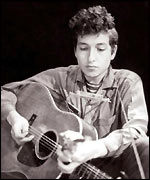
Bob Dylan - He was probably thought of as more explicitly political during his earlier days, particularly on the earlier (profoundly influential) recordings like The Freewheelin' Bob Dylan, which featured songs like "Blowin' in the Wind," "Masters of War," and "A Hard Rain's A-Gonna Fall" and The Times They Are A-Changin' which had along with the great title track, such other classics as "With God on Our Side," "Only a Pawn in Their Game," "Ballad of Hollis Brown" and "The Lonesome Death of Hattie Carroll." However, his career in its entirety is symbolic of many things, including the very idea of America; in that, he cannot help but be thought of as a symbolic icon of who we are.

Bruce Springsteen - I'm originally from New Jersey but I got to see the Boss back in 1980 at Madison Square Garden, when he was touring in support of his LP at the time, The River. What an amazing live performer. He played for a solid 4 hours, and never seemed to run out of steam. I was truly impressed.

It turns out, too, that Springsteen is a truly progressive artist, and very much an heir to the old folkie spirit of Woody Guthrie and Pete Seeger. Not for nothing did Springsteen recently release a rollicking album We Shall Overcome: The Seeger Sessions Here too is a link to a video performance

And after 911, Springsteen's music was healing. When I first heard the song "City in Ruins" with its pleading chorus of "Come on rise up!/Come on rise up!/Rise up," I was so moved that I wept for a long time.

Patti Smith - and in particular the song "People have the Power." This song (co-written with her late husband, Fred "Sonic" Smith of the MC5) is so good that I will quote it in its entirety.

Phil Ochs - Ochs is probably best known for the song "I Ain't a Marching Anymore," an anthem of the antiwar movement in the 1960s, which was put to great use in the documentary film Berkeley in the Sixties

And as proof of Ochs' commitments to progressivism, here is a transcript of Ochs testifying at the trial of the Chicago 7. He, Abbie Hoffman and company were comrades in the struggle.

Pete Seeger/the Weavers - I feel a special bond with Pete Seeger, as he is my neighbor here in Beacon, NY, and like me, Pete was a part of John Hall's successful campaign for Congress. Last weekend, he led a little gathering of community members in some festive outdoor holiday caroling. And at a Hall fundraiser a while back, he had us all sing-along to his antiwar song "waist deep in the big muddy" and told us the story of how he was censored by CBS when attempting to sing the song on the Smothers Brothers TV show. It was neither the first nor the last time that Pete Seeger, a truly decent and wise man, would run afoul of the powers that be.

John Lennon/the Beatles - John became more radical over time, and while some of his actions - such as the "bed in" for peace - may have seemed a tad gimmicky, his heart was certainly always in the right place. I still mourn his loss to the world.

REM - Performing at the Bring 'Em Home Now! concert at New York's Hammerstein Ballroom, an event benefiting a number of anti-war groups earlier this year was not the first political act of REM's Michael Stipe, but was merely an example of his commitment to progressive causes.

Billy Bragg - This man, who set Woody Guthrie lyrics to music on some award winning records, is a socialist electric guitar playing folkie at heart, who's written a ton of really fine odes to the working man (and working women; in fact, a good chunk of his songs are tender love songs).

Yo La Tengo - While not necessarily a political band per se, these veteran indie rockers from Hoboken, NJ have their hearts in the right place, having been catalysts for the 2004 John Kerry campaign through their "swing state" tour, along with such notable as Chris Heinz, Eric Bogosian, Ted Allen from 'Queer Eye,' John Wesley Harding, Rachel Dratch and Friends from SNL, author Jonathan Lethem, and many others. Plus, their ode to voting (with Chris Stamey - actually his song went like this): "If you don't get out and vote this year/You're really not groovin/It takes every one of us/to keep the country movin/You can make it to the polls/you can get it together/Won't you meet me there?/we'll vote/we can make things better/V-O-T-E: Vote!" (This reads a bit hokey but, trust me, actually sounds good when set to music.)

Bob Marley - So many of his songs - so well known at that - were message songs. You can pick which is your favorite. Mine happens to be "Punky Reggae Party," his tribute to the London punks of the late 70s.

Fela Kuti - This guy was so charismatic and so politically motivated that he took on the dictatorship in his country of Nigeria and came close to leading a revolution, only to get violently beaten down, and to have his mother killed, by the dictatorship. Invented a genre, "afrobeat," and wrote a classic political anthem, "Zombie." His attitude toward women was problematic, but in nearly all other respects, he was a true progressive and visionary.

Bruce Cockburn - It is hard to think of too many songs other than "If I had a Rocket Launcher" - written during Reagan's proxy wars in central America - as expressions of righteous anger toward fascistic bullies. Also wrote a not quite political but equally great song called "Lovers in a Dangerous Time."

Steve Earle - a brilliant songwriter, perhaps best known for his passionate opposition to capital punishment. Steve Earle experienced many trials and tribulations in his life; as he's put it, he's "been to hell and back again." A true progressive, he serenaded us during the GOP occupation of NYC back in the summer of 2004.

Woody Guthrie - Not much needs to be said about the man who wrote the left wing alternative patriotic song "This Land is Your Land" other than to say that he inspired millions of people over many generations.

John Hall - I'm proud to call him my representative in congress and I was moved and inspired when he sang Steve Van Zandt's "I Am A Patriot" during his victory speech on election night.

Bonnie Raitt - Not only did she help her dear friend John Hall to win his seat in Congress, but she's been a voice for political progress for many years. And on top of that, she plays a pretty mean slide guitar.

KRS-One - perhaps the most brilliant thinker/writer in the history of hip-hop, Kris Parker, aka KRS-One of the ensemble Boogie Down Productions, has been philosophizing about street life and inner city culture for several decades.

Public Enemy - helped to give hip-hop a new sound to go along with their message of self-determination in such classic tracks as "Fight the Power," "Bring the Noise," "Party for Your Right to Fight," and "Prophets of Rage."

The Ramones - I know that the Ramones also weren't really a political band per se, but I include them mainly because of Joey Ramone and the classic song "Bonzo goes to Bitburg." I loved the Ramones, and was lucky enough to see them live, twice, back in the 70s.
Here's Salon's fine posthumous tribute to Joey Ramone

The Flames of Discontent - this is a local band of politically active folky musicians here in the Hudson Valley who specialize in protest and old union songs like "Joe Hill." Here is their website.

Check them out. They're really cool people and very talented musicians.

Rage Against the Machine - for merging neo-marxian analysis with metal and hip-hop and having it all work. Or, as the All Music Guide puts it, "sloganeering leftist rants against corporate America, cultural imperialism, and government oppression into a Molotov cocktail of punk, hip-hop, and thrash"

Neil Young - Here's the video for Let's Impeach the President. I think that this appropriately angry rant of a song says it all, when it comes right down to it.

Arrested Development - best remembered for the classic song "Tennessee," which dealt with the inherent spiritual journey of Black history, as the All Music Guide suggests, this band offered a blend of "progressive rap collective fusing soul, blues, hip-hop, and Sly and the Family Stone-influenced funk with political, socially conscious lyrics."

Michael Franti/Spearhead - A Bay Area based social and political activist, Franti, a founding member of hip hop groups, the Beatnigs, the Disposable Heroes of Hiphoprisy, and Spearhead, is a very talented socially conscious artist whose writing has developed in complexity as he's gotten older. He's addressed such topics as AIDS, racism, homelessness, and the conflict in the Middle East, all with an acutely sharp sense of justice and humanity, and has thus been compared to Mavin Gaye and Gil-Scott Heron.

Gil-Scott Heron - When I think of him, I think of such great, righteous classic tracks as "The Revolution Will Not Be Televised," "Washington, D.C.," "Johannesburg," and "Message to the Messengers," as well as his "tributes" to the Reagan administration - "B Movie" and "Re-Ron."

Digable Planets - a jazz influenced hip-hop group with a mellow vibe from Brookyn, this group stood for gender equality and peace, in sharp contrast to much of the prevailing norms within 90s hip-hop. And "9th Wonder (Blackitolism)" is one of the catchiest tunes ever recorded in any genre.

Tom Petty - Here's a quote from an interview with Petty in Esquire.

"The war in Iraq is shameful. Whether you're pro or con Bush, you've got to admit: The guy lied. And he continues to do so. I can't understand why he's just not run out on a rail. To send somebody's kids off and have them killed for no good reason--he's going to have his day in hell for that. I wouldn't want that karma.
When you kill somebody's little sister with a missile, he's going to hate you forever. And the next generation will hate you even more."

Also, he released an explicitly political album in 2002, called The Last DJ which featured the track "Money become king," which like his earlier song "Jamming me" is an accurate statement for our time of greed, mass production, and information overload.

Henry Rollins/Rollins Band - Rollins, on the surface, may mistakenly appear to be a right wing and stereotypical "angry white male," but looks can be deceiving. In fact, he is a much more complex figure. Highly intelligent and fiercely independent, Rollins has taken punk's DIY philosophy and made it his primary operating principle. Politically, he is smart enough to see the stupidity of those operating from positions of power, and to call them on their bullshit. Musically, he offers a rockingly hard catharsis.

Ani DiFranco - a antimaterialist, post-feminist folkie for our times.

Michelle Shocked - Michelle Shocked manages to bring a Lower East Side/countercultural sensibility to all of the music that she explores, be it folk, bluegrass, jazz, or anything else.

Beastie Boys - It's hard to believe that these guys went from the wisecracking adolescents of "Cookiepuss," and "Egg Raid on Mojo" to mature elder statesmen of hip-hop and alternative rock, organizing events to save Tibet, as well as the environment. But they have.

Fugazi - Ian McKaye is a living icon, and this DC based band of his, which came out of hardcore punk, embodies all of the ideals of a movement that emerged in opposition to the mainstream in all of its dismal forms (such as plastic corporate culture). Musically, Fugazi stand out against the countless, uninspired guitar bands whose music all kind of sounds the same.

Bad Religion - This long standing punk band takes on a wide variety of right wing targets - such as the Christian right - in a series of very tuneful musical moments.

Miriam Makeba - Perhaps best known for the 1967 Afropop hit "Pata Pata," and in the US for her friendship with Harry Belefonte, Miriam Makeba, known as Mama Africa, is a vitally important figure in African musical and cultural history. From South Africa, she was driven into exile for her outspokenness against the apartheid regime. When she returned to her native land in the wake of Nelson Mandella, she was hailed like a returning queen. In the meantime, she has a large body of recorded works, nearly all of which are full of charm, warmth, and elegance.

Moby - Moby, a vegan, feminist, radical, anticorporate techno/pop artist with energies channeled in many different directions gives Christianity, a version of which he follows, a very good name. Had his breakthrough moment with the LP Play and the hit song "South Side."

Carmaig deForest - He who plays the ukelele punk style. Here is a link to his fine song George Bush Lies

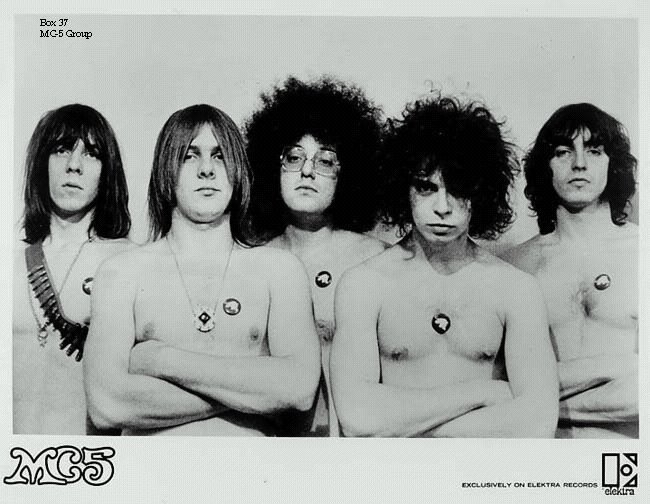
The MC5 - from Detroit, these guys were the godfathers of political punk, combining hard rock and late 60s garage punk, with a radical, countercultural sensibility permeating their songs, some of which, like "American Ruse" and "Motor City is Burning" created a picture of a polarized society coming apart at the seams.

The Gang of Four - These guys are basically punk's version of the Frankfurt School, or Adorno and Horkheimer with punk riffs and funk basslines.

God is My Co-Pilot - offer a radical gender vison wedded to some very radical postpunk grooves

The Ex - are an influential and deeply respected musical collective. I've written about them elsewhere in a review of their singles compilation that the Ex are committed philosophical idealists and political activists, who also happen to be a long existing and deeply influential punk band. The Ex - from the Netherlands - formed in the late '70s, and began recording in the early 80s, releasing singles, EPs and LPs on various indie labels, and participating in the creation and maintanence of politcal punk scenes in Europe, the U.S., and elsewhere. This recording compiles much of their early work, and sounds very raw and abrasive, as well as minimalist and lo-fi. Most of the songs are sung in English (though some, such as "Lied Der Steinklopfer," are not), and offer socially critical and political themes and topics. While a number of the songs sound a bit same-ish, some do stand out. Among these are "Human Car," which explores the analogy of man:machine, and does so over classic hardcore punk riffs, and some of the more explicitly topical or political songs, such as "Cells," "Weapons for El Salvador," "Enough is Enough" (which also features a kind of Middle Eastern sounding motif within the song), and the dirgelike "Memberhips." Highly recommended for fans of noise bands and/or leftist message oriented punk.

Linton Kwesi Johnson - Johnson, a former Black Panther in the UK is a politically conscious dub reggae artist who has dealt, really insightfully, with themes of racial and class oppression.
Here's a review from All Music Guide:

"Although he has only released one album of new material in the last ten years, and has virtually retired from the live stage after his 1985 tour, Linton Kwesi Johnson remains a towering figure in reggae music. Born in Kingston, Jamaica and raised in the Brixton section of London, Johnson invented dub poetry, a type of toasting descended from the DJ stylings of U-Roy and I-Roy. But whereas toasting tended to be hyperkinetic and given to fits of braggadocio, Johnson's poetry (which is what it was — he was a published poet and journalist before he performed with a band) was more scripted and delivered in a more languid, slangy, streetwise style. Johnson's grim realism and tales of racism in an England governed by Tories was scathingly critical. The Afro-Brits in Johnson's poems are neglected by the government and persecuted by the police. Johnson was also instrumental (with his friend Darcus Howe) in the publication of a socialist-oriented London-based newspaper, Race Today, that offered him and other like-minded Britons both black and white an outlet to discuss the racial issues that, under Margaret Thatcher's reign, seemed to be tearing the country apart. For one so outspoken in his politics, Johnson's recorded work, while politically explicit, is not simply a series of slogans or tuneful/danceable jeremiads. In fact, is was his second release, Forces of Victory, where his mix of politics and music united to stunning effect. Dennis Bovell and the Dub Band could swing (as in jazzy) more than many reggae bands, and guitarist John Kpiaye, the group's secret weapon, offered deftly played, dazzlingly melodic solos. But it was Johnson's moving poetry, galvanizing moments such as "Sonny's Lettah" and "Fite Dem Back" that made it obvious that this was a major talent."

Willie Colon - I teach in the Bronx, which is where this activist musician from the world of salsa originally hails from. Colon, in addition to maintaining an influential, nearly 40 year musical career, has also been an activist on human rights, immigration, and environmental issues, and has been an advocate for the Latin American community in the U.S. In the Bronx, he is a revered figure

Pearl Jam - a bit mainstream at times, these guys - not unlike U2 - nevertheless bring a social conscience to arena rock. And their last record, titled simply Pearl Jam, rocked like a motherf**ker, with the song "World Wide Suicide" an apt description of a world with George W Bush in power. In fact, the entire album appears to be a protest statement against the Bush administration.

Dave Van Ronk - I got to see him play live once, many years ago at a socialist scholars conference in Manhattan, where after playing the song "losers," he, being an old lefty, thanked the audience with a "goodnight comrades." Not knowing exactly who he was, i.e., that here was a guy who mentored a young Bob Dylan, I now know I was in the presence of greatness. The voice, the songs, the fingerpicking guitar style, the attitude, the irreverenace toward power, Dave Van Ronk was a complete package.

Utah Phillips - No one quite sings a protest song like Utah Phillips.

Marvin Gaye - He wasn't necessarily always political, but What's Going On is a masterpiece, and the title song on it still rings true.

the Mekons/Jon Langdon/Three Johns/Waco Brothers - Britain's neomarxist country punks who combine sociopolitical analysis with roots music have been doing their thing - in a myriad of different permuations - for over twenty years.

Frank Zappa - Probably more of a libertarian than a leftist, Frank Zappa was afraid neither to experiment with music nor to speak on freely and honestly on what he thought was true.


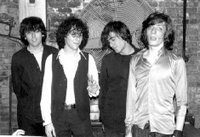
Incidentally, the photo above is of the great Almanac Singers, featuring a very young Pete Seeger (that's him, second from the left) and also Lee Hayes (later a member of the Weavers) as well as Woody Guthrie. The Almanacs specialized in union/working class tunes and were explicitly political; they were later blacklisted as communists.

Saturday, December 30, 2006

Music as negative as it gets

There are feel good movies, feel good songs, and other forms of entertainment designed to bring about feelings of goodness, contentment or even, bliss. However, there are also musical moments in which a tortured artist wishes to share his/her pain and/or a very bleak sense of the world or of just basic existence. This can sometimes be quite beautifully done, as in, for example, some of the music of Nick Drake. Drake was a genius, and even though he fell into a state of psychic disintegration toward the end of his life, with this reflected in his music (particularly the LP Pink Moon), his music remained largely generous toward the listener.

In the mid to late 1980s, one trend in post-punk and industrial music was toward a kind of loud, noisy abrasiveness, as in the music of such performers as The Butthole Surfers, Scratch Acid, Foetus (James George Thirlwell), Killdozer, the Cows, Pussy Galore,The Swans, Live Skull and various others. This music was truly an underground phenomon, resulting in extreme, atonal music which was really theatrical, often used to accompany a type of confrontational performance art. Also influential for such groups were such pioneering acts as Suicide, Throbbing Gristle, Public Image, Ltd. and Flipper.

Here, too, is a sampling of clips for music that explores sadness, isolation and other negative emotional extremes.

Jandek (live) Real Wild
Jandek (video) The Glade
Lou Reed Berlin
Voivod Insect
Leonard Cohen Everybody Knows
Joy Division She's Lost Control
Flipper Ever and The way of the world

and a song by a fairly mainstream rock act, the Who The Real Me but one which addresses a sense of onself as emotionally unstable.

Also relevant; a short film Waking to Berlin

Here, too, are some songs that wallow in self-pitying, self-loathing (or at least self-depreciation), or self-objectification. Yes, some of these are shamelessly manipulative of the heartstrings; that's probably what made them such classic hits.

"Lovesick Blues" - Hank Williams
"Crying" - a remake by Roy Orbison with KD Laing
"It's My Party" - Leslie Gore or Bryan Ferry
"What kind of fool am I?" - This torchy showtune has been widely covered, but here it gets sung by Anthony Warlow, who I had never heard of prior to this search; apparently he is a star of such shows as Phantom of the Opera.
"I'm a loser"- The Beatles (hard to feel sorry for them over all the screaming girls)
"Baby's in black" - The Beatles
"In my room" - The Beach Boys
"I wanna be your dog" - The Stooges (a more recent version of this band)
"Poor Poor Pitiful Me" - Linda Ronstadt or Warren Zevon
"You and me against the world"- Helen Reddy
"Rainy days and mondays" - the Carpenters
"At Seventeen"- Janis Ian
"53rd and 3rd" - The Ramones
"Pinhead" - The Ramones
"Pretty Vacant"- The Sex Pistols
"Seventeen" - The Sex Pistols
"Boredom" - The Buzzcocks
"Who Said" - Richard Hell and the Voidoids
"Life Stinks" - Pere Ubu
"55 Times the Pain" - Husker Du
"I Felt Like a Gringo" - The Minutemen
"Milk it" - Nirvana
"Rape me" - Nirvana
"Deformography" - Marilyn Manson

A video chronology of post-British Invasion rock-pop and power pop


Here are some links to some music videos (and in some cases live clips) for some songs, mostly by indie/cult pop/rock and classic pop/rock bands, I happen to like. I've put these together because they offer a kind of narrative of a kind of skewed post-British Invasion rock-pop and power pop, that goes from garage rock through bubblegum to punk and post-punk, with some brilliant, genius moments at various points in between. I generally remember all of this music, some of which was in the air during my early childhood in the mid 60s; to me, bands like the Cyrkle and the Dave Clark Five represent the 60s as I experienced it much more than icons like the Jefferson Airplane or the Grateful Dead.
(a note: a number of these links are dead, but it turns out that in most instances, they have been reposted, perhaps by a different user, and are thus very easy to search for; corporate entities like Viacom are going to have to spend a great deal of company resources fighting what will probably prove to be a losing battle in the neverending attempt to retain a corporate oligopoly over such archival images, will lots of earned ill will in the process.)

The Cyrkle Red Rubber Ball
The Lemon Pipers My Green Tambourine (and here they are, performing on the Mike Douglas Show)
Wayne Fontana and the Mindbenders The Game of Love
Hermans Hermits Dandy
Tommy Roe Sweet Pea
1910 Fruitgum Company 1-2-3 Red Light
The Okaysions Girl Watcher
The Statler Brothers Flowers on the Wall
The Boxtops The Letter
The Association Windy
The Toys A Lover's Concerto
The Dave Clark Five I Like it Like That
The Monkees Tomorrow's Gonna Be Another Day and I'm a Believer and Mary Mary . Here too is the video to the very obscure Windup Man
The Nazz Open My Eyes
Crispian St. Peters The Pied Piper
Petula Clark A Sign Of The Times
The Mamas and the Papas Monday Monday
The Beatles Hello Goodbye and Rain and Tomorrow Never Knows and And Your Bird Can Sing and All Together Now and It's All Too Much and I Am The Walrus and Your Mother Should Know and Flying
Donovan There is a Mountain (and here's another version .)
The Kinks Waterloo Sunset and Days and All You Need is Love
The New Vaudeville Band Winchester Cathedral
The Beach Boys GoodVibrations
The Byrds Turn Turn Turn
The Turtles She'd Rather Be With Me
Oliver Good Morning Starshine
The Doors Hello I Love You
The Foundations (c.o There's Something About Mary) Build Me Up Buttercup
Pink Floyd Scarecrow
The Cowsills The Rain The Park and Other Things
Simon and Garfunkel (live) 59th Street Bridge Song (Feeling Groovy) (and here's a related early 70s Cheerios Commercial)
The Archies Sugar Sugar (and here is the cartoon version of this bubblegum classic)
Mungo Jerry In the Summertime
Big Star Lady Sweet
Paul McCartney Uncle Albert/Admiral Halsey and Helen Wheels and Hi Hi Hi and Junior's Farm
The Looking Glass Brandy (You're A Fine Girl)
The Raspberries GoAlltheWay
Sweet Little Willy and Fox on the Run
Bay City Rollers Rock and Roll Love Letter
Eddie and the Hot Rods Do Anything You Want To Do
The Buzzcocks What Do I Get and Promises and Nothing Left At All
The Saints I'm Stranded
The Undertones Teenage Kicks
The Dickies Banana Splits song
Meat Puppets Get On Down and Scum
The Replacements Kiss Me On the Bus and I Will Dare and Kids Don't Follow and Kick Your Door Down
The Stone Roses Elephant Stone
The Jesus and Mary Chain Rollercoaster and You Trip Me Up
Blur Chemical World and She's So High
Stereolab Cybele's Reverie and Wow and Flutterhttp
Yo La Tengo From a Motel 6 and Big Day Coming
The Chills Heavenly Pop Hit
The Bats Too Much
The Television Personalities The Painted Word
The Close Lobsters Never Before Seen
Beulah Gravity Brings Us Down
Circulatory System Should a Cloud Replace a Compass?
Teenage Fanclub Everything Flows
Shonen Knife Redd Kross andRiding on the Rocket and Twist Barbie
Miyavi Woo Hoo
The NoMen I Know Where Syd Barrett Lives
The Raveonettes Love Trash Can and Attack of the Ghost Riders
Black Rebel Motorcycle Club Love Burns
The Magnetic Fields Love Goes Home to Paris
East River Pipe Metal Detector

And, on a somewhat unrelated note, I thought I'd throw in a link to a very funny musical parody of the John Waters' star Divine, played by John Candy on SCTV. My wife and I heard this song, as performed by Elvis, while shopping at the Mall, and of course with thought of this clp (which was filmed, incidentally, in the subfreezing winter air of Alberta, Canada.

Wednesday, November 08, 2006

Some Personal Favorite LPs by my Favorite Artists

A
Afghan Whigs - Gentlemen
Laurie Anderson - Big Science
Joan Armatrading - Me Myself I
Louie Armstrong - The Hot Fives and Sevens
Albert Ayler - Spiritual Unity


B
Stiv Bators - L.A., L.A.
Beach Boys - Pet Sounds
The Beatles - Revolver
Belle and Sebastian - Push Barman to Open Old Wounds [Deluxe Edition]
Boogie Down Productions - Ghetto Music: The Blueprint of Hip Hop

David Bowie - Station to Station
James Brown - 20 All Time Greatest Hits
The Byrds - Mr. Tambourine Man
The Butthole Surfers - Live PCPPEP

C
Caberet Voltaire - Voice of America
Johnny Cash - Unchained
Ray Charles - Genius Hits the Road
The Clash - The Clash
The Clean - Vehicle
Leonard Cohen - Songs of Love and Hate
John Coltrane - A Love Supreme
Elvis Costello - Get Happy

D
Miles Davis - Bitches Brew
Dead Boys (Stiv Bators) - Young, Loud and Snotty
The Doors - L.A. Woman
Nick Drake - Fruit Tree
Bob Dylan - Blonde on Blonde

E
Steve Earle - El Corizon
Brian Eno - Here Come the Warm Jets

F
The Fall - Perverted By Language
The Feelies - The Good Earth
Flipper - Generic Album Flipper
Fred Frith - Gravity

G
Gang of Four - Entertainment
Dizzy Gillespie - Groovin' High
The Grifters - Ain’t My Lookout
Go-Betweens (Grant McLennon,Robert Forster) - 1978-1990
Guided By Voices - Bee Thousand
The Gun Club - Death Party EP

HHalf-Japanese (Jad Fair, David Fair) - Fire in the Sky
PJ Harvey - Dry
Jimi Hendrix - Are You Experienced
Gil Scott Heron - From South Africa to Southern California
Billie Holiday - Quintessential Billie Holiday
Holy Modal Rounders (Michael Hurley, Peter Stampfel) - Have Moicy
Husker Duh (Bob Mould-Sugar, Grant Hart) - Zen Arcade

I
Isley Brothers - That Lady

J
Jane's Addiction - Nothing's Shocking
Robert Johnson - King of the Delta Blues
Joy Division - Closer
Jungle Brothers - Done By the Forces of Nature

K
King Crimson - Beat
Kinks - Muswell Hillbillies
Kronos Quartet - Pieces of Africa

L
Led Zeppelin - Physical Graffiti

M
Magnetic Fields - The Charm of the Highway Strip
The Meat Puppets - Up on the Sun
Minor Threat - Minor Threat
The Minutemen - Buzz or Howl
Mott The Hoople - Mott
My Bloody Valentine - Isn’t Anything?
Mekons - Rock `N' Roll
Charles Mingus - Mingus Ah Um
Thelonius Monk - Brilliant Corners
Van Morrison - Astral Weeks
The New York Dolls - The New York Dolls
Nirvana - Bleach

O
Phil Ochs - All the News That's Fit to Sing

P
Charlie Parker - Now's the Time
Parliament-Funkadelic - Mothership Connection
The Pastels - Mobile Safari
Pere Ubu - The Modern Dance
Pink Floyd - The Piper At the Gates of Dawn
Public Enemy - It Takes a Nation of Nation of Millions
Public Image, Ltd. - Second Edition
Tito Puente
Pavement - Slanted and Enchanted

R
The Ramones - Rocket to Russia
Lou Reed - Growing Up in Public
REM - Life’s Rich Pageant
Replacements - Let It Be
Residents - Third Reich and Roll
The Rolling Stones - Exile on Main Street
Henry Rollins/Black Flag - My War
Sonny Rollins - Saxophone Collosus


S
The Saints - I’m Stranded
Pete Seeger - Pete
The Sex Pistols - Never Mind the Bollocks
Elliot Sharp - Errata
Michelle Shocked - Short Sharp Shocked
Patti Smith - Horses
Sonic Youth - EVOL
Soundgarden - Superunknown
Spacemen 3 - Playing With Fire
Phil Spector - A Christmas Gift For You
Bruce Springsteen -
Stereolab - Emporer Tomato Ketchup
Karzheinz Stockhausen
The Stooges - Fun House
Matthew Sweet - Girlfriend

T
The Talking Heads - Remain in Light
Television - Marquee Moon
Television Personalities
Richard Thompson - Shoot Out the Lights
Throbbing Gristle -
Johnny Thunders - So Alone
Peter Tosh -
Toots and the Maytals -
T-Rex -

U
Undertones - The Undertones
Unrest - Perfect Teeth

V
The Velvet Underground - The Velvet Underground

W
Wire - Pink Flag
The Weavers - Wasn't That a Time?
Kurt Weill - Lost in the Stars: The Music of Kurt Weill
Tom Waits - Bone Machine
The Who - Who’s Next
Hank Williams -
Stevie Wonder -

X
XTC - Oranges and Lemons

Y
Yo La Tengo - I Can Hear the Heart Beating as One
Neal Young -

Monday, November 06, 2006

List of bands/performers I've seen live


List of bands/performers I've seen live (in alphabetical order):

I saw my first "rock concert" in the mid 1960s - the 3rd tier British Invasion band Freddie and the Dreamers, known in the states for their one hit "I'm Telling You Now." Here they are doing the freddie - what a goofy dance that one was. My family and I saw them at an outdoor show in the pre-gambling Atlantic City.

(I may have also seen Paul Revere and the Raiders, around the same time, but my memory is hazy on this one.)

Here is a (mostly complete) list (with dates, opening bands and venue, where these are recalled, and also, drawing upon various net searches, the band playlists).

Aerosmith (Golden Earring - MSG November 24, 1978) Here appears to be some vintage live Aerosmith from 1978.

Bad Brains - Boston (early 1990s)
Marcia Ball - Lowell Folk Festival 1985
Marcia Ball - Lowell Folk Festival 1986
Beck (Belle and Sebastian, Raveonettes, Polyphonic Spree, Gang Gang Dance
Whirlwind Heat
- Coney Island, NY October 2, 2005)
Pete Best Band - Maxwells, Hoboken, NJ . Pete Best was the Beatles original drummer, and after many years out of the public spotlight, he's now performing songs done by the early Beatles, back when they were playing the clubs of Liverpool and Hamburg. If you close your eyes and listen, it feels like you've stepped back in time and gone to the Cavern club. Anyway, I got a chance after his set to meet him and to get an autograph; I can now say that I met a Beatle.
Black Sabbath (Van Halen Aug 27, 1978, NYC - Madison Square Garden. black sabbath set list Symptom of the Universe, War Pigs, Never Say Die, Dirty Women, Rock & Roll Doctor,
Guitar Solo, Electric Funeral, Embryo / Children of the Grave, Paranoid, Snowblind, Black Sabbath, Sabbath Bloody Sabbath (instrumental), Iron Man, Fairies Wear Boots, Hand of Doom, N.I.B. ,Gypsy, Shock Wave, Swinging the Chain )
Blondie
Bongos (Chesterfield Kings)

Eric Burden and the Animals
Butthole Surfers (Redd Kross, Das Damen
, Ritz, NYC, 1987). Here are the butthole surfers doing the song "hey" in 1985; and here is a short video for redd kross showing what they looked and sounded like in the mid 80s.

I couldn't find any videoclips of Das Damen but here is what they looked like; they were pretty decent band


Buzzcocks - Boston (early 1990s)
Buzzcocks - Irving Plaza 2006

Celibate Rifles (Dumptruck) (CBGB, July 1986; note, this was the Celibate Rifles only on their only U.S. tour, and it was at this show that the band recorded the tracks for the live release "Kiss Kiss Bang Bang" about which CD Universe.Com says it is "considered by those in the know to be one of the best live albums of all time. 13 tracks including the definitive version of Radio Birdman's supercharged Aussie punk anthem, 'Burn My Eye'.") Here are the celibate rifles still rocking out. Even though this is from around 20 years after I got to see them, they still have the raw high energy, which is good to see.

Cheetah Chrome, Bad Brains, etc. (free in Central Park, early 1980s)
Chicken Legs (ex. Little Feat)
The Chieftains

Eric Clapton (Elton John)
The Clash
(Steel Pulse, Boston 9/19/1979 setlist City of the DeadI'm So Bored with the USAComplete ControlLondon CallingWhite Man In Hamm PalaisKoka KolaI Fought the LawSafe European HomeJail Guitar DoorsThe Guns Of BrixtonEnglish Civil WarClash City RockersStay FreeClampdownPolice and ThievesCapital RadioWrong 'Em BoyoJanie JonesGaragelandArmagideon TimeCareer OpportunitiesWhite RiotJimmy JazzWhats My Name) . And here they are , from the British show Top of the Pops, from early 1978
The Clash (Kurtis Blow, Gregory Isaacs NYC, 1982/3?)
The Clean (The Minders - Maxwells, Hoboken, September 2001)

Das Damen
Ray Davies
(Irving Plaza NYC 2005) (here he is from this show doing Oklahoma USA)

Miles Davis - summer, 1983. Here's the later Miles with musicians. The DBs
Carmaig de Forest

Carmaig de Forest (Barbès - Park Slope, Brooklyn) . Here is his wonderful song George Bush Lies

Del Byzantines
Del Fuegos (New Hampshire)
the Du-Tels (i.e., Peter Stampfel and Gary Lucas )

Feelies (Ritz, NYC, 1987-90) Here they are live in New York doing "deep fascination" and here's another early classic

Fleshtones (Peppermint Lounge - NYC) Here's a really rocking performance from French TV.
Steve Forbert - Ship Bottom, NJ (free outdoor show, with the audience sitting in beach chairs)
Peter Frampton - 1977
Freddy and the Dreamers (Atlantic City, mid 1960s)
Robert Fripp (free show, Central Park, summer 1990?)

Gamelan Orchestra (Madison, WI)
The Gang of Four - summer, 1983
Dizzy Gillespie
Indigo Girls
Green
Guided By Voices (w. Ambulance)
The Gun Club
(here doing Brother and Sister)

Guns and Roses/Faith No More/Metallica (early 1990s Giants Stadium)

Hermans Hermits
Hot Tuna

King Crimson (summer, 1983) (here is the version of the band I saw live- Robert Fripp, Tony Levin, Bill Bruford and Adrian Belew.)

Kiss (Madison Square Garden, 1978)
Kronos Quartet (Madison, WI 1988)

Lach
Live Skull
(Here's a music video). I saw this Sonic Youth-esque band at CBGBs some time in the 1980s.

Los Lobos
Nick Lowe
(free show, Boston, summer, 1995)
The Lunachicks (here's a video for this highly underrated band). I saw them at an outdoor show in Hoboken in around 1990 or 91.

Lyres (Maxwells - Hoboken) Here they are live doing "I want to help you Anne." I'm not sure when this was filmed, but they sound like they did when I saw them.

Meat Puppets (with a live clip of the song "swimming ground")

The Membranes (Madison, WI, 1989/90). An obsecure, barely remembered but highly original band. Here is their All Music Guide page.
Paul McCartney
Roscoe Mitchell
Morphine


The New Barbarians
New York Dolls
New York Dolls
- Hoboken street fair Fall 2006

The O'Jays
Old Skull
Outlaws (Mama's Finest, The Stanky Brown Group
)

Pere Ubu - Hoboken, 1990/91(?)
Tom Petty and the Heartbreakers (Boston, 1980)
Iggy Pop (Boston, 1980)
Pop Will Eat Itself

Queen (Piper December 1 or 2, 1977, MSG)

Ramones (Tuff Darts, Runaways - March 25, 1978 Capital Theater, Passaic NJ)
Ramones (Syl Sylvain)
(Here is the classic Ramones lineup (Johnny, Joey, Dee Dee and Marky) doing blitzkreig bop from what appears to be the late 70s or early 80s; here's the Runaways live from around the same era.)
Todd Rundgren (Hall and Oates)


Pete Seeger (Washington, DC)
Pete Seeger (NYC)
Pete Seeger (Beacon NY)
Pete Seeger (local activist Connie Hogarth’s living room, at a fundraiser for John Hall's congressional campaign; Pete sang this anti-war anthem and those of us there sang along.)

(Here, also, is Pete,June Carter, and Johnny Cash from a TV program from the early 1960s)

Scrawl
Shriekback (live Nemesis)

Soft Boys (reunion tour, Maxwells, Hoboken, October 2002)

Sonic Youth (NYC club, 1987)
Sonic Youth (Central Park, 2003; here's a brief clip; and here's the legendary Richard Kern directed Death Valley 69 video)
Soundgarden (Madison, WI, 1989/90) (some live music from them)
The Spanic Boys
Bruce Springsteen
(Madison Sq. Garden, 1980, the "River" tour)
Peter Stampfel Until I find something else to post, this will have to do - some flash animation for the silly, but very catchy, Fugs/Holy Modal Rounders tune boobs a lot.

Sugar - Boston (and here is a great clip of Bob Mould and Lou Barlow doing a Sugar song.)

Matthew Sweet - Boston, 1993
Matthew Sweet - NH 1995

Here's Matthew Sweet live on MTV.


Talking Heads - NYC, Radio City, 1980 (with live performance)
Television (reunion tour, 1993, Boston) Here's a live performance from one of the reunion shows.

Tin Huey
Derek Trucks Band
Richard Thompson -
Here he is doing one of my favorite of his songs 1952VincentBlackLightning which he did when we saw him


The Tubes
- Central Park
The Turtles

U2 (March 9, 1981 - the Ritz, NYC: setlist The Ocean, 11 O'Clock Tick Tock, Touch, An Cat Dubh, Into The Heart, Another Time, Another Place, The Cry, The Electric Co., Things To Make And Do, Stories For Boys, Twilight, I Will Follow encores: Out Of Control, 11 O'Clock Tick Tock, The Ocean)
U2 (The Alarm) outdoor show July 1, 1983- NYC)

Dave Van Ronk (Socialist Scholars Conference, NYC, early 80s) I wish this clip were a bit longer, but it gives a fine taste of this legendary folk singer.
Tom Verlaine (Ritz, NYC)
Here is Verlaine doing a wonderful version of the Television song "Glory"

Doc Watson (with John Herald) Here's some Doc Watson live

The Who (Madison Square Garden, 1979)
Johnny Winter

Yo La Tengo (Prospect Park, Brooklyn, 6/7/2002)
Yo La Tengo (Northsix, Williamsburg, Brooklyn, December 16, 2003, Onion Holiday Party, with David Cross, the Walkmen, Dev Attack, Tyondai Braxton)
Yo La Tengo (Maxwells, 12/12/2004 w. the Coctails, 12/30/2005 w. Volcano Suns, 12/28/2005 w. The Sun Ra Arkestra under the direction of Marshall Allen)
Yo La Tengo (Beacon Theater, NYC 2004)
Yo La Tengo (Battery Park, w. Steven Malkmus and the Jicks ) July 4, 2005
Yo La Tengo (NYC)
Yo La Tengo (March 29, 2005: Tonic Benefit, Tonic NYC)
Yo La Tengo ( THE JOSHUA WHITE AND GARY PANTER LIGHT SHOW. )

a really nice live clip of Yo La Tengo doing "little eyes"

Also, various music festivals and multi-artist performances, including:
-Lowell Folk Festival
-New Orleans Festival (NJ)
-Williamson Street Block Party, Madison, WI
-Halloween, Madison, WI
-Central Square Block Party, Cambridge, MA
-Hoboken Alt. Rock Festival
-Central Park Rock Against Racism
-Caribbean Day/Labor Day Festival – Brooklyn, NY
-Copley Square Summer Fest
-The American Songbook – music of Arthur Schwartz, Lincoln Center
-Anti-Folk/Howlfest – Lower East Side
-TibetHouse benefit - w. David Byrne, Keb Mo, Yo La Tengo, Phillip Glass, Bright Eyes, Angelique Kidjo (2/25/04)
-also, miscellaneous British bands at the Marquee Club, London, UK 1994

Some political punk (and proto-punk) LP reviews


Music wedded to politics can work very well, or it can backfire. Here, in my opinion, are four examples that work very well.

I've posted these elsewhere and am now posting them here.


The Ex - Singles. Period. The Vinyl Years, 1980-1990

The Ex are committed philosophical idealists and political activists, who also happen to be a long existing and deeply influential punk band. The Ex - from the Netherlands - formed in the late '70s, and began recording in the early 80s, releasing singles, EPs and LPs on various indie labels, and participating in the creation and maintanence of politcal punk scenes in Europe, the U.S., and elsewhere. This recording compiles much of their early work, and sounds very raw and abrasive, as well as minimalist and lo-fi. Most of the songs are sung in English (though some, such as Lied Der Steinklopfer, are not), and offer socially critical and political themes and topics. While a number of the songs sound a bit same-ish, some do stand out. Among these are Human Car, which explores the analogy of man:machine, and does so over classic hardcore punk riffs, and some of the more explicitly topical or political songs, such as Cells, Weapons for El Salvador, Enough is Enough (which also features a kind of Middle Eastern sounding motif within the song), and the dirgelike Memberhips. Highly recommended for fans of noise bands and/or leftist message oriented punk. Perhaps less so for the casual listener.

The Ex's members have included: G.W. Sok, Andy Ex, Tom Greene, Terrie Hessels, Terrie Ex, Katrin Bornfeld, Wineke T. Hart, Luc Klaassen, Jos Kley, Sabien Witteman, René, and Geurt

The Gang of Four - Solid Gold


When I saw the Gang of Four perform live in the early 80s, bassist Dave Allen, a brilliant musician, was, sadly, gone, though in his place was a fairly decent replacement, Sara Lee. The Go4 were true post-punk progressives, who sought to elevate women rock musicians as the equals of men, at a time when this was still a novel concept. In fact, the Gang of Four's progressivism was partly the result of the earthshaking consequences of 1970s British punk, of which this band was definitely a part (their first recording - the Damaged Goods EP - was released in 1978, still the punk heyday). Their progressivism was also a result of their university education in philosophy, and specifically, in the neo-marxist critical theory of scholars like Walter Benjamin, Theodor Adorno, Max Horkheimer, Herbert Marcuse, and Antonio Gramsci, all of whose work informs the Gang's lyrical content and sensibilities. But these were also smart young men, loaded with talent, living in a world in which they felt alienated. Seeing them live was great! They rocked, and they connected with the audience, a large gathering of mostly Americans who were deeply in to them. And lead singer John King certainly had the funky white guy thing going on, as he was constantly in motion on stage, as guitarist Andy Gill riffed away, fearlessly and energetically.

Here, on Solid Gold, mixing punk, postpunk, funk, dance, and just a bit of free jazz, the Gang of Four wildly succeed in producing one of the 80s finest musical hours. The key to this record are probably the tight rhythms which the band produces. In fact, the bass lines here are anything but simple, whereas the guitar lines are effectively simple, and sharply rhythmic. Also, the band's messages are a bit less cryptic and thus a bit clearer than on Entertainment, which seemed so immersed in social theory (though, of course, this recording has a song called Why Theory?, about praxis, with the clever split of the vocals between King and Gill). The messages of song's like Capital (It Fails Us Now), History's Bunk!, and If I Could Keep It For Myself are pointedly clear, not to mention very insightful.

One other observation. This has some of this band's best, and best known, songs, including What We All Want (which they've recently re-recorded), In The Ditch, Outside The Trains Don't Run On Time, and To Hell With Poverty.

The MC5 - Kick Out the Jams


Throughout rock history, there have been a number of bands, particularly from the Midwest, vying to be known as *the* all American, working class "people's band." This is a trend which, I would say, probably accelerated with Grand Funk, continued through the 70s with groups like the Michael Stanley Band, as well as Bob Seger (whose Get out of Denver is a classic, and whose Night Moves remains for me a personal favorite of its era), and others, and then picked up steam in the 80s with John Mellencamp (an aside - there is a contemporary punk band, I don't know what they sound like, but they call themselves John Cougar Concentration Camp, which I find amusing, albeit in a non-PC way), and probably dozens of others. Most recently, we've had Kid Rock.

However, I've always thought the true representatives of the repressed condition of the heartland working class were more the rebels and miscreants like the MC5 and the Stooges, (or in England, Black Sabbath from the industrial city of Birmingham would have been more or less the equivalent) and then later on, bands like the Dead Boys and even Pere Ubu , or today, the novelty-rap act Insane Clown Posse. No disrespect intended to the working class, or for that matter, the Midwest; I come from working class roots myself, and spent three enjoyable years of my life in the Midwest.

Listening to this blend of garage band power chords, proto heavy metal and protest rock, what you hear, beyond a somewhat murky sound, is the blood, sweat and tears of a fine group of rebel rockers. These guys deserve to be thought of as a seminal precursor to punk, particularly the more politically driven punk of bands like the Clash, Dead Kennedys and Millions of Dead Cops. Here, then, is a chance to hear what the MC5 sounded like live. It may have been the 60s, but mellow is not a word to describe them.

Refused - The Shape of Punk to Come: A Chimerical Bombation In 12 Bursts

I got first turned onto punk in the late 70s, while in high school, after hearing the first two Ramones records. I then tried to listen to and read about punk, and particularly favored bands that had some originality or a style all their own.

In the eighties, as punk went in at least two directions (i.e., postpunk/noise and hardcore), there were many bands but few standouts; Husker Duh, Black Flag, the Flesh Eaters, X, P.I.L., Gang of Four were among the standouts.

So here it is, early in the 21st century, and what is punk, now? Some would argue that its glory is largely a thing of the past, and what passes for punk now is basically a rigid formula and a pale imitation of what once was. While that may be largely true, I know that its also always possible to over idealize the past and to not see it as it actually was. In fact, there were mediocre punk bands in the 70s and there are at least some excellent ones in the late 90s/early 00s; Refused are one such band.

I recently got turned onto this band, and this record in particular, and boy is it good, really good in fact. Sounding a bit like a combination of Fugazi, the Rollins Band, and a number of punk-metal bands from over the years with just a sprinkling of jazz and techno thrown in to enhance the recipe, Refused play really tight, have a wide variety of arrangements to keep things from getting monotonous (a problem with a lot of bands), and offer sharply satirical lyrics containing a sort of anarchist rage at global capitalism and forms of repression. All in all, a complete package on a record which will likely wind up on a lot of critics lists of the best punk of all time. What this all proves: punk lives!


Sunday, July 30, 2006

In praise of some musical "outsiders"


For me, and I acknowledge that this is purely subjective on my part, my preference tends to be for rock music - my favorite musical genre - which doesn't necessarily contain too much unnecessary technical prowess. I think I've been listening to so much punk, as well as post- and proto- punk (and/or what was for a time rather meaningfully called "alternative rock," until, perhaps around the time that Pearl Jam hit the charts), for so long now that it has irreversibly altered my aesthetic sense. I suppose that taste is also subjective. I find, for example, that I can only take so called "classic rock" particularly anything recorded from the mid 70s on, in at most, small doses, if at that. I find most of what Eric Clapton did following his Derek and the Dominoes phase tedious and uninspired; a song like "Free Bird" makes me exhausted, even though I acknowledge that many hear it as a near sacred anthem; I think, for example, that Daniel Johnston, an outsider artist, whose musical instrument of choice is either a Fisher Price children's keyboard or a cheap $50 Sears acoustic guitar, is a much better musician than, say, Ted Nugent or Joe Satriani, in the sense that this more naive figure, Johnston, relies on instinct and vision, and not on cliches and formula with which to construct his craft; in many ways, I think that Jimi Hendrix - whose music I really love -, as well as Eric Clapton, whose earlier stuff I generally appreciate, were nevertheless perhaps two of the worst things to happen to music, because they both inspired too many rock guitarists, in the 70s and beyond, to want to be soloists, and in my opinion, most rock instrumental solos, especially those that go on for more than 20 seconds, are boring; which is also why I would rather listen to marginally capable musicians - such as the Shaggs, the New York Dolls, or Half-Japanese, than to very competent musicians like Van Halen, Rick Wakeman, or Emerson, Lake and Palmer. In fact, I'd argue that Half-Japanese were probably 20x greater overall than a band like Van Halen, and that Jad Fair is a greater and more important musician than David Lee Roth or Eddie Van Halen. Daniel Johnston is, to me, a more important songwriter and performer than, for instance, Neal Diamond or Elton John. In fact, Daniel Jonston's songs about Casper the Friendly Ghost have much more charm and originality than anything Elton John has written for a Disney musical. I also think that much of what passes for contemporary mainstream rock is completely lame and a big waste of time.

Let me add here that - in my opinion - some lengthy guitar solos in rock are just fine. For example, Robert Fripp's solo on Brian Eno's song "Baby's On Fire" is, to me, truly inspired. I also love the guitar solo on Frank Zappa's song "Willie The Pimp," (with vocals courtesy of the great
Captain Beefheart; I was amazed when Saturday Night Live once had him on as a musical guest, the kind of thing that this now teen pandering show would never do), from the album Hot Rats, a record I used to listen to each time I visited my sister and brother-in-law (it belonged to him, among other fine records) in Massachusetts. Zappa's work here, as elsewhere, borders on jazz, where instrumental soloing is an essential part of the genre. And I also love Adrian Belew's work on the Talking Head's classic - Remain in Light. (I was privileged to be able to see the Heads live at Radio City in 1980 with my friend Mike and they were quite amazing.) Incidentally, both Belew and Fripp were members of a later version of the prog rock band King Crimson, who for me have always been the exception to this "rule." I like them a lot, but can only take so much of the likes of Gentle Giant, Emerson Lake and Palmer, and Genesis.

I recognize, of course, that mine is probably a minority opinion. I tend to dislike things in rock music the more popular they are and to appreciate stuff that most people would think is bad/weird/incompetent, particularly when it expresses a passionate originality, which is why I appreciate stuff like the Shaggs, Daniel Johnston, Pere Ubu, Half-Japanese, The Throbbing Gristle, the Velvet Underground, and many many others. My idea of a great rock show is probably not 50,000 people at a baseball stadium responding to some big name act (after paying $80.00 for tickets) but rather, something like 80 people in a tiny club grooving on some obscure alt.rock band, particularly if they are the only ones left remaining after others were driven away by the inherent weirdness of the performers or, alternately, a group of folks of widely varying ages inside a gym dancing their hearts out to the unintentional polyrhythms of the Shaggs. I guess, then, that beauty certainly is in the eyes of the beholder. Anyway, to get right to the point, this is my roundabout way of saying how much I love bands like Half-Japanese. who are truly artists, with a vision. So too, the somewhat tragic figure of Daniel Johnston.

Two other points: As the above image suggests, once upon a time, back in 1989, Jad Fair and Daniel Johnston - two longstanding true outsiders - managed to get together to record a "session" of songs, mostly co-written by both artists (along with covers of such notable figures as Phil Ochs, Glass Eye, the Beatles, the Butthole Surfers, and Rogers and Hammerstein!), a session that was both crudely primitive and fully inspired. Not necessarily the best work of either artist, it is nevertheless great in its own way, with such magic moments as a dog barking accompanying the song "Kicking the Dog," Shaggs-like minimalist drumming (apparently courtesy of Johnston; that's him with the drum kit in the above photo) and a rather unhinged version of the South Pacific tune "Happy Talk." It's a unique recording.

The other point is: both artists have been the subjects of a series of really fine, empathetic feature length documentaries by Jeff Feuerzeig - The Band That Would Be King and The Devil And Daniel Johnston . I saw The Devil and this Spring and afterward spent the day thinking about such things as how mentally ill creative types are so often misunderstood and how creative an artist Daniel Johnston - hie own worst enemy - is, in spite of himself. Someday I'd love to meet Jeff Feuerzeig and chat with him about film, music and related topics since I think we probably have similar perspectives and similar aesthetics.

Wednesday, July 05, 2006

Which is the true obscenity?


Many have decried the lowering of standards in the culture, invoking Senator Pat Moynihan's memorable phrase "defining deviancy down," and pointing to such well publicized examples as Janet Jackson's "wardrobe malfunction" during the 2004 Superbowl.


However, much less has been said, particularly by these cultural critics, about the fact of a well known self-proclaimed and highly influential "Christian preacher" such as Rev. Pat Robertson using his nationally televised soapbox, The 700 Club to call for the assassination of international leaders whom he dislikes. As the New York Times points out points out,

Pat Robertson, the conservative Christian broadcaster, has attracted attention over the years for lambasting feminists, "activist" judges, the United Nations and Disneyland.

Now Mr. Robertson has set off an international firestorm by saying on his television show that the United States should kill the Venezuelan president, Hugo Chávez, a leftist whose country has the largest oil reserves outside the Middle East.

"If he thinks we're trying to assassinate him, I think that we really ought to go ahead and do it," Mr. Robertson said Monday on his show, "The 700 Club." "It's a whole lot cheaper than starting a war. And I don't think any oil shipments will stop."

Here is Robertson on CNN offering the government this advice. (And Here is Jon Stewart's brilliant take on this, which undercores the blatant hypocricy of those who would, on the one hand, see the brief televised flashing of a female nipple as a crime, while on the other, would defend the likes of Robertson spweing hate speech as freedom of expression.)

Unfortunately, Robertson gets to keep his soapbox, because the 700 Club is carried, via contract stipulation, by the Family Channel, which Robertson sold to Fox, which then sold the Family Channel to Disney. At the same time, the FCC, acting at the behest of mostly religious and cultural conservative, issued record fines against CBS, which broadcasted the Superbowl halftime show.

Incidentally, Hugo Chavez is still waiting for the United States Justice Department to get back to him after requesting that it investigate Robertson's calls for his murder.

Saturday, June 24, 2006

Representing the culture and ambiance of the East Village

(Note: this is part of an ongoing research project I am doing called Do Places Have Essences; I presented a preliminary version of this study earlier this year at the Eastern Sociological Society meetings in Boston, MA.)

One function of the arts – i.e., theater, film, performance arts, visual arts, etc. - is to see how they represent specific times and places, that is, the essential qualities of particular historical sites and moments.Two recent cases, in which the East Village/Lower East Side are in some way represented, are considered here. One case, the film version of the musical Rent, which recreates a lost era, is considered. A second case, a visual arts show, recontextualizes and thus celebrates the art products of an earlier era.

Rent, a Hollywood film version of the Off Broadway (later moved to Broadway) musical by Jonathan Larson is the story of a group of twenty-somethings of mixed races, genders, and sexual orientations, living (squatting?) in the East Village in the late 1980s. It is a story based on the opera “La Boheme” by Puccini. It is, as one reviewer suggests, “a story of love in a time of HIV/AIDS” (Batson-Savage, 2006). It is also meant to be a prototypical New York story, with a particular reference to the East Village as perhaps New York’s most fertile creative frontier.

Nevertheless, questions arise as to the plausibility of the essential depictions, both of the theatrical version, and in particular for the film version.

The writer Sarah Ferguson, for example, points out flaws in the film, particularly the artificiality and inauthenticity of its depictions. She writes (2005).

Although critics have praised director Chris Columbus’s “painstaking” efforts to recreate the old flavor of Alphabet City, anyone who knows the neighborhood is instead confronted with a made-up landscape of mix- matched locales. Columbus filmed most of “Rent” in San Francisco and Oakland, then pieced in bits of Loisaida back in to authenticate the scenery, sometimes to jarring effect.

The facade of the Marz Bar, that lowdown watering hole on Second Ave. and First St., makes a guest appearance but is digitally rendered to appear midblock instead of on the corner, near an improbably placed Wiz store. Vazac’s bar on Avenue B is remade into Life Café (belying the Vazac’s sign still visible on the side of the building) and there’s an F train subway stop just off Tompkins Square.

And no East Village loft ever had such high ceilings as the one the central characters inhabit, which looks more like an old factory building in Soho or Tribeca circa the 1960s. Meanwhile the favorite drug-copping spot of the junk-addled stripper Mimi (played by Rosario Dawson) looks like it was filmed after hours at the South St. Seaport (or more likely, a lot in San Francisco).

Ditto for the riot scene at Maureen’s ditzy protest performance, which takes place in a cavernous warehouse that never existed down here. Maureen comes off like an annoying cross between Karen Finley and Sandra Bernhardt. And what to make of the aspiring rocker Roger (Adam Pascal) wailing Bon Jovi style in a brief, car-commercial-like detour to the New Mexican desert to mourn his breakup with Mimi? These Hollywood folks can’t help themselves it seems. The impulse to dumb down and deliver a sanitized version of true grit is inexorable.

The reduction of the East Village into a series of bohemian-esque clichés is not surprising. “Rent” the movie is the apotheosis of the Lower East Side as Hollywood movie set, where the local residents are simply off-camera “extras,” and production companies are free to tow your car at will. (I remember them filming the “La Vie Bohème” scene outside Vazac’s and watching them blow plastic snow into the trees.)

It’s interesting that the characters in the movie are only truly fulfilled when they watch themselves projected onscreen in protagonist Mark’s 16-millimeter film, which simply plays back snippets of previous scenes in the movie like a grainy promo trailer for the flick. Given the overmarketing of the East Village as an expensive playground — or “entertainment district” — for wannabe hipsters, even these movie characters seem to find the celluloid version of themselves more appealing.

In sum, the film appears to be offering a revisionist and watered down, or glossed over, history. While it touches upon elements that made the East Village unique, it appears not to fully capture these elements.

A second case is of a recent art show. As reported in the Village Voice, an alternative newsweekly, published now for the past fifty years in New York City, The New Museum, a museum at West 22nd Street in Manhattan, organized a multi-art program at the beginning of 2005 entitled “East Village USA.” This program was devoted to the underground art of the East Village which was done, by and large, starting in the late 1970s and continuing through the 1980s. Reviewing the show for the Village Voice, writer Jerry Saltz comments

if you come away thinking the East Village was just a bargain basement of second-stringers, you're looking too narrowly or haven't adjusted your filters to appreciate artists who, while not "major," are or were quite gifted. Viewers with open minds and gentle hearts will discern ideas and attitudes that were put into motion then that are still in play today…Admittedly, the place emitted a tang of cultishness, desperation, and squalor. This scene was all trial and error and delusions of grandeur: ego, libido, unexamined ambition, adolescent energy, creepy collectors, crazy critics, obnoxious middlemen, burnout, and ferment. Everything was built bottom-up and was thrilling for 15 minutes before it was spun into success and out of existence. Artists, dealers, and hangers-on who had no other choice, weren't worldly enough, weren't part of the more established scene, or just wanted to try it another way had one brief fling at bohemian royalty, success, and excess. This motley crew created the overhyped twinkling star known as the East Village art scene.

The artists, whose work was displayed, included Keith Haring, Philip Taaffe, Peter Hujar, Jean-Michel Basquiat, Nan Goldin, and David Wojnarowicz, as well as perhaps lesser known artists such as Gracie Mansion, New Math, Civilian Warfare, and Piezo Electric.

While the art products of these artists depicted various subject matters and dealt with a variety of themes (including the theme of transgression), the grouping of them together under a single roof suggested that, at the very least, they shared a common history, and helped to symbolize the East Village as an arts center. As Saltz puts it, “for a time the East Village was the art world's duodenum—no matter how it came out, almost everything passed through it.”

NWA vs. the Confederate flag

I was once engaged in a spirited debate about the meaning of the Confederate flag, and whether it is inherently racist (or just an innocent symbol of "Southern pride"). While not necessarily inherently racist, I would argue that the use of the flag to symbolize Southern pride cannot be separated from its use as a racist symbol, given that these two uses are so deeply and so historically intertwined.

Anyway, the debate then gravitated to such topics as gangsta rap, (and to the problematic concept of "reverse racism").

Here is what I commented then.

I do have a certain amount of respect and sometimes even fondness for rap/hip-hop, and think, at its very best, it is brilliant - like, for example, Public Enemy's It Takes a Nation of Millions to Hold Us Back, De La Soul's 3 Feet High and Rising, as well as some of the recordings of The Jungle Brothers, Wu Tang Clan, Dr. Dre, Cypress Hill, Boogie Down Productions, Beastie Boys, Eric B and Rakiim, Salt `N Pepa, Queen Latifa, Grandmaster Flash, etc. I used to live in the Bronx in the mid 1980s (I now work there), and certain rap cuts help keep that time of my life alive via musical association memories.

When I think of gangsta rap, I think of it, in some ways, as analogous to some of the political punk bands - like MDC (Millions of Dead Cops), CRASS, Dead Kennedys, and others from around the same era. Both are brash, angry, somewhat witty, and sometimes not very intellectually sophisticated; then again, both were primarily the product of adolescent energies, rather than more mature thinking. As a teacher, I am very comfortable being amongst adolescent energies and trying to channel some of it toward intellectual sophistication.

A song like "Fuck Tha Police" by NWA might seem offensive; then again, if we look at a song like this in context, and realize - via the Rodney King verdict and the investigations in the root causes of the ensuing riots - that racism and brutality among the LAPD (as well as other police agencies) toward the poor minorities of Compton, South Central and East L.A. was - and perhaps still is - endemic, then the song begins to make a bit more sense; if one group systematically oppresses another group, then the oppressed group may just feel -and periodically express, perhaps even poetically - some anger toward the oppressor.

In other cases, such as Ice T and his pimp story raps, or a bit later on, in Snoop Dogg's songs, my sense is that the performer is trying to achieve something like a cinematic-styled, or narrative, verisimilitude in the raps; [it's interesting, and not surprising, that both Ice T and Ice Cube (as well as Snoop Dogg) wound up making their mark in Hollywood.] In other words, a thick description rather than a justification for the lifestyle being depicted. This is in following a long African-American tradition going back to the early blues and griot singers, and to later pulp fiction authors like Donald Goines and Iceberg Slim.

In comparison, I see nothing of any positive value in an institutionalized confederate flag.

I asked Bobby Dylan.....


I was recently listening to Bob Dylan's 1st record, which is entitled, appropriately enough Bob Dylan. It's a great record, even though only a few of the songs are Dylan originals; it contains some classic tunes, like House of the Rising Son and a song later associated with the film Oh Brother, Where Art Thou? - Man of Constant Sorrow, not to mention the tune, In My Time of Dying which was later covered by the British band Spacemen 3 (with their trippy version called Come Down Easy.) Dylan's wit, originality, fine musical instincts, and his embracing of such kindred spirits as Woody Guthrie, Robert Johnson, Leadbelly, Ramblin' Jack Elliot, and Jack Kerouac all come shining through. He sounds unpolished, and that is a very good thing; heard in the context of the folk music boom of the 1950s and early 60s, in which folk was smoothed over as easy listening music for mass consumption, Dylan is truly a diamond in the rough. He sounds like someone you'd go to a small folk club, and not on the Ed Sullivan Show, to hear. And in his Song To Woody, Dylan's obvious love for Woody Guthrie and all he stands for comes convincingly across.

Well, as I was listening to it, it occurred to me that, while Bob Dylan" was released in 1962, it was recorded in 1961, the year of my birth. 1961 was the year that John Hammond signed Dylan to a recording contract after seeing him perform in the clubs of lower Manhattan, where Dylan lived after leaving Minnesota.

That same year, on the other side of the ocean, a young British fan happened to walk into a Liverpool record shop to ask the proprietor, Brian Epstein, if he had any copies of the song "My Bonnie," which had been recorded by the then relatively unknown Beatles; Epstein sought the band out, a year later they had a recording contract, and the rest is history.

1961 was the year that a charismatic young president took office; the hopes and dreams of America, and indeed, the world, for peace, freedom, and equality, which were projected onto and associated with Kennedy and Camelot were not unlike the ideals that were associated with the songs of Bob Dylan, particularly those which offered social and political commentary; also, it has been suggested by many that the emergence of the Beatles in America a few years later in 1964 was a means of helping a grieving nation to get over some of its grief and to start feeling happy again. In any event, the 60s were by then well under way.

Dylan, then, gets his start here, and as the 60s unravelled in some surprising ways, so too would Dylan with later turns in his magnificent, unique musical career.

Some thoughts on Nick Drake


The thought of British folksinger Nick Drake being so depressed that his life would end at the tender young age of 26 is itself, to me, a sobering and depressing fact about how hard life can be. While Nick Drake (1948-1974) may not have been able to cope with life, it is also clear to me that his was a gentle and sensitive poet's soul. Listening to his record Pink Moon - his most stark recording - you come directly in contact with Nick Drake's very soul, and this soul lives on. The record is thus haunting, and beautiful.

I'm not exactly a religious fanatic (I started out Catholic and eventually became a Unitarian-Universalist, with an eclectic set of beliefs and a non-dogmatic non-literalist take on religious traditions), but I cannot help but think that the sheer depth of the music of Nick Drake, and of Pink Moon in particular, hints at a realm of the spiritual. There is simply something in this - Drake's quiet guitar strumming, his mournful singing, the overall simplicity of the arrangements - that is not unlike the moment of contemplation that one sometimes experiences while sitting in a holy place, be it a church, or a chapel, or even a small natural pond surrounded by nature, and which is thus transcendent.

In fact, as Ian McDonald's sympathetic Mojo article "Exiled From Heaven" argues, "Nick Drake wasn't a literal disciple of Blake or Buddha. There are no direct Blake references in his lyrics, nor is he likely to have treated Buddhism as more than a confirmation of concepts he'd arrived at through his own experience. Nevertheless Blake's mystical vision and the tenets of Buddhism illuminate a great deal of his work. Drake's outlook seems to have boiled down to the linked recognitions that life is a predicament and that the world is ultimately an irreducible mystery to us. Why it exists, why we exist in it, why there is anything at all, we haven't the slightest idea. From this sense of predicament and mystery flows all his work and also his message to us. More than that, the same influences shaped the growth and decline of his life." The article adds, about Drake's vocals, that it is "a low, close, sustained sound, rich in chest vibration yet entirely without glamorous vibrato. It's the sound of incantation: slow, deep, OM-like. His phrasing is riverine, flowing across metre and through bar-lines as though detached from normal time. It's as if he's seeking to impress upon us the sense of another way of being."

Looking at, and considering such elements of this music, it is obvious that there is more here than a quick consideration might recognize. It is perhaps these various elements which makes this music so rich, and which, for me at least, causes it to become ever more satisfying with each subsequent listen. I just know that I'll be listening to Nick Drake for the rest of my life. I can't say that with confidence about too many musicians.

Finally, I close with this

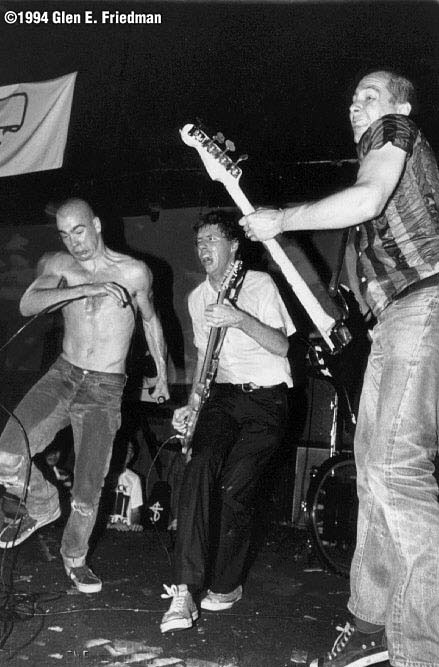
The furious intensity of L.A. hardcore punk


I never got a chance to see the band Black Flag live, but having read about them and listened to their records, I know that they were amazing. They embodied the spirit of furious intensity of punk rock in the form of Los Angeles based hardcore, and a movement for which they were, whether they wanted to be or not, among the leaders.

The music of Black Flag was a kind of hard pounding. It was the sound of a fistfight (or perhaps a riot; punk bands have long been artistically inspired by riots as sociocultural phenomena). Yet, unlike most fistfights, it was also quite intelligent, meaningful, and message driven. In that sense, the fistfight was more of a war of ideas; other hardcore bands - notably the Dicks, Dead Kennedys, Millions of Dead Cops (MDC), The Proletariat, and in the U.K., bands like the Business and the Exploited, might have all been more explicitly political. Black Flag's politics were concrete, and pragmatic. Guitarist Greg Ginn was, after all, the enterpreneurial wiz who put out SST records ; eventual lead singer, in fact the essential Black Flag lead singer, Henry Rollins - one of my cultural heroes and a Renaissance man for my generation - would eventually surpass Ginn's entprenerialism with his own 2-13-61 Publications, putting out books, CDs, DVDs, t-shirts, and more significantly, contributing via these a number of alternative voices (something vitally needed in today's conformist, repressive, corporatized climate). Rollins would eventually do this, along with his acting gigs, his successful career as a monologuist, his radio show, his IFC talk show hosting duties - and, lest we forget about the music, his leadership of the (punk/metal/funk/jazz influenced) Rollins Band and the occasional Black Flag reunion, as well as other musical forays; when the man gets to sleep, I don't know.

However, thanks to the magic of video, one can look back to the past. Black Flag's Rise Above video gives a good look at what a Black Flag show must have been like. Here, Henry Rollins is shown as his younger, somewhat skinnier self. He/they are intense. And the song - all about bouncing up when you are beaten down - is about as hopeful a message as a song can be.

Punk rock today, or what passes for "punk" according to mainstream media/the music industry's accounts, doesn't even come close to this. One is reminded of religion, in which a religious community attempts to convey its divinely inspired experiences, but has a hard time doing this over time. The community keeps the words, and invokes rituals, but what these may have eventually denoted, or tried to invoke, gets altered, and in some cases watered down.